Friday, March 8, 2019

It's Kind of a Funny Story

This is a relatively heavier (more intense?) book than what I usually tend to cover, so I feel like I need to leave this here:If you or someone you know is experiencing suicidal thoughts/ideation, do not hesitate to call 1-800-SUICIDE (or your local equivalent if you are outside the United States) or inform your/their doctor. Help is always available and there is always a way out of how you're feeling with proper guidance.
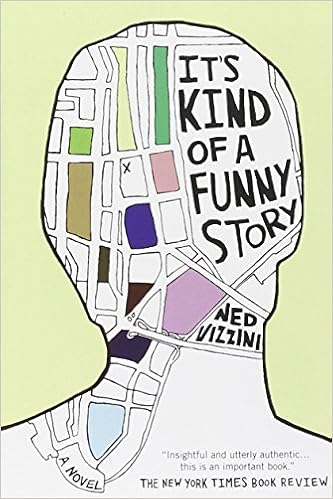
Related image


Summary:

Craig Gilner is a 15 year old boy who lives with his family in a middle-class Brooklyn neighborhood. He attends the prestigious Executive Pre-Professional High School, after having studied intensely to get admission. Once admitted, he becomes overwhelmed by the school's intense academic pressure. He feels alienated, and unable to fit in. His stress eventually manifests itself in an eating disorder, distorts his sleep habits, and intensifies his suicidal thoughts. He goes to a psychiatrist who prescribes him Zoloft and is elated for a brief period. He believes he is cured and decides to throw away the medicine. Consequently, his depression builds until, unable to fend off his suicidal ideation, he calls 1-800-SUICIDE and is admitted to a psychiatric hospital. He meets many other patients and is supported and encouraged by his family once they learn of his hospitalization. However, he is still apprehensive about going back to school. Craig meets a female patient, Noelle, who coped with a history of abuse by cutting her face with scissors. In isolation from the outside world, and with help from Noelle, Craig confronts the sources of his anxiety and regains his health. During his recovery, Craig experiments with art and discovers that he has a great deal of natural talent and ability. He realizes his art makes him feel good, and wishes to pursue it. He returns home at the novel's end, with a new energy to live life.

My thoughts:

There couldn't have been a more perfect time for me to read this book and I'm glad it fell into my lap. For anyone who doesn't actually know me, I'm a high school senior who just applied to college and goes to a semi-competitive (I don't think the school as a whole is super competitive but definitely the people that I interact with on a daily basis are competitive //they're mostly Asians though so I think I brought this on myself). Anyways, my point for anyone younger who's going to be applying to college in a few years, there comes a point where you realize that you are not nearly as smart as you think you are. You've been living all this time in your insulated bubble where you were in the top 10-15% in a grade of about 300-500 and then suddenly you get rejected from your first choice college and you have no idea where you stand. And that's ok. It's heartbreaking. You will cry a lot. It'll be hard to move on for a while. That's alright as long as you get yourself back together and keep on trucking on. I love the setup of this book and the unique situation. Not many people tend to talk about the stress of high school in terms of how it's supposed to set you up for success in college and eventually the "real" world and how distorted our perception of "success" gets when we're surrounded by people whose only goal is to get into an ivy league or in this case the Executive Pre-Professional High School.
Depression among teenagers is a real thing. It's horrifying to realize that you're depressed, to realize that you have no control over how you feel and that you sometimes just can't feel at all. And so you try something, anything, just so you can feel again and that's how people turn to alcohol and drugs. Craig himself doesn't do drugs or drink but his best friend Aaron does to cope with his family situation. He cites being with Aaron as something that alleviates his symptoms a little. I just looked into contact highs and it turns out that very little THC (the thing that gets you high) is exhaled in marijuana smoke so it's almost impossible to get a true contact "high" but the feeling that people have when they're sober but around people who are aggressively smoking is more of a psychological "high" than caused by chemicals. The psychological response lets Craig live a pseudo-normal couple of hours. 

Here's a really good quote that resonated with me so much that I started crying because someone finally put it into words: “This was all an excuse, I think. I was doing fine. I had a 93 average and I was holding my head above water. I had good friends and a loving family. And because I needed to be the center of attention, because I needed something more, I ended up here, wallowing in myself, trying to convince everybody around me that I have some kind of. . . disease. I don’t have any disease. I keep pacing. Depression isn’t a disease. It’s a pretext for being a prima donna. Everybody knows that. My friends know it; my principal knows it. The sweating has started again. I can feel the Cycling roaring up in my brain. I haven’t done anything right. What have I done, made a bunch of little pictures? That doesn’t count as anything. I’m finished. My principal just called me and I hung up on him and didn’t call back. I’m finished. I’m expelled. I’m finished.”

From me to whoever's reading this, never ever doubt what you feel because it doesn't fit in some mold of what mental illness "should" look like. Some people throw up a lot when they get sick and others get really high fevers and others just get weak really fast. The same goes for depression and any other mental illness. Not all people with depression have difficulty getting out of bed or difficulty keeping up with schoolwork/jobs/life. Some people, like Craig, are perfectly capable of functioning like "normal" people in their depressed state but feel it even more deeply in every breath they take. They often begin to think that their breaths are stolen air and that they have no actual claim to illness because they don't look depressed and that no one around them suspects that anything is wrong. Also another point: Recovery is not linear. Recovery is wild as all hell and sometimes you feel like you're on that upward trend and you're actively getting better, but sometimes it feels like the world is caving in and that everything's falling apart and you're right back to where you started, but that's a needed part of recovery too. Recovery also doesn't look the same for everyone in terms of trajectory. For some people it does look like regular therapy and medication and trying their hardest to get their life back on track where they left off. For others, it's a healthy change in diet/exercise and making more time for the people they love in their lives because they keep the bad thoughts/feelings away. Whatever recovery looks like for you, it's fine. You will get better. It's just going to take some time. All good things take time. There's hope for you yet! And Happy Reading!

(I know I get really passionate about mental illness but it's something really close to my heart after watching people I know closely suffer in silence. I probably don't know who's reading this, but please take care of yourself!))

Friday, February 8, 2019

Looking For Alaska

I actually like John Green romance novels for their honesty about teenagers. That's why I praised Paper Towns for how ridiculous the plot was, but also how easy it was to place a character like Q in all of us teenagers or Margo in the girl next door that you've somehow fallen in love with, even though you've drifted apart. I remember that's why I didn't like The Fault in Our Stars that much.. Well I liked certain aspects of it but not the whole book because the writing of the characters felt too mature. Like even though Hazel and Gus both have their faces buried in books all the time teenagers don't really talk as witty as they do. I have a similar problem with this book, but somehow the writing style feels a bit more justified? It might be because the writing style juxtaposes how impulsively the characters act and kind of makes it seem like they have more thought going on than they actually do express.
I love the way that some writers, especially YA writers, don't forget what it really means to be an awkward, bumbling teenager trying to grow up too fast. Because there's something so beautiful about how messy adolescence is that keeps me reading YA romance novels. Also the fact that I'm currently a teenager and I empathize better with these characters because I'm living/have lived through a less dramatized version of their experiences and I know what it feels like.

The cover:

Image result for looking for alaska

Miles Halter wants to get out of his high school as quickly as possible. He chooses to go to Culver Creek boarding school because he's tired of being a misfit, of having to drag through every day of school because he just does not have friends. Francois Rabelais' last words were, "I go to seek a great perhaps." Miles goes to boarding school in rural Alabama looking for his "perhaps". 
And he finds it in the form of a ragtag group of friends who smoke and drink and have each other's backs. There's his roommate Chip (or the Colonel) with his strong math skills and odd habit of drinking vodka with milk, Takumi the Japanese boy with a talent for rapping, Lara the Romanian exchange student, but most of all, there's Alaska Young. Everything about her is so mysterious and so awe-inspiring for Miles that it's love at first sight, from her looks, her personality, to the way she plans the best pranks. 

But one fateful night, the image of camaraderie they had falls apart and the fallout leaves Miles and the Colonel to try and sort out the pieces. Who on Earth even was Alaska Young and how much did they actually know about her?

My thoughts (EXTREME SPOILERS AHEAD):

There's a lot to unpack here. Maybe let's go from back to front?

Is it just me or does it feel like Miles learns nothing as a result of the whole book? I think that from the moment he meets Alaska, he's just pining after her. Even while he's dating Lara. Even at the cost of driving the Colonel and Takumi away from him. Yeah, Alaska's got some nerve and she's a pretty cool girl, but how much of it is a product of Miles romanticizing her and Alaska romanticizing herself. There's that quote from this book that I've seen everywhere looking for materials to write this review on and it's "The only way out of the labyrinth of suffering is to forgive." But doesn't it feel like Miles just continues to torture himself over Alaska's death? He's got his head in the "what ifs", literally daydreaming about marrying and having kids with her, while he can't get himself to accept the fact that she is dead and that those daydreams will stay that way. He didn't just lose Alaska that night, he lost her and all of his fantasies. I think that's the most shocking part for Miles and the fact that he can't just keep ignoring reality. John Green takes us through all of the stages of guilt so beautifully through Miles and the Colonel, but it feels like Miles just made a full loop around while the Colonel has just accepted that she's gone and that he can't put the rest of his life on hold for that. Maybe the point is that people grieve differently and examining how two different people approach it brings a perspective to it that wouldn't be there if he had just said it. 
I guess to Miles, Alaska was everything he wished he could be and more, so the daydreams aren't just about him not dealing with her being dead, but they're also a coping mechanism to distract him from the fact that he needs to work on his personality like mad. His problem is that he isn't assertive. He literally doesn't start dating Lara until Alaska sets him up with her because she thinks he needs a girlfriend. My friend actually pointed out that there's no mention of him ever initiating any plans that they make. Literally all of their hangouts are the Colonel or Alaska getting an idea or just getting bored and dragging Miles out to the smoking hole or hanging out in Miles and the Colonel's room. And even the final prank, the Colonel initiates it and Miles just does most of the planning so it looks like he's taking a more active role in the interest of keeping Alaska's spirit going.   
Going along with that, there are 2 really good quotes from Takumi that kind of sum up what I'm trying to say here in terms of Miles and his obsession with his daydreams of Alaska. Basically at this point Takumi and Miles get in a fight because Miles is just insensitive and kinda forgets the rest of his friends after the incident to just brood over Alaska. 
The first one: "Like you really want to know the truth? Or like you want to find out that she fought with him and was on her way to break up with him and was going to come back here and fall into your arms and you were going to make hot, sweet love and have genius babies who memorized last words and poetry?"
The second one: "I'm not pissed at you for letting her go. But I'm tired of you acting like you were the only guy who ever wanted her. Like you had some monopoly on liking her."

(2 bonus quotes that made me smile: 
"I just did some calculations and I've been able to determine that you're full of shit" ~The Colonel
"I hope you didn't bring the Asian kid along thinking he's a computer genius. Because I'm not." ~Takumi)

In my honest opinion, was Alaska's death a suicide? No. As Miles and the Colonel's research points out, Alaska was very drunk (a .24 BAC is bad. Very bad. Like you could unintentionally kill yourself while trying to do normal things kind of bad) and already not thinking too straight because she immediately started crying while talking to Jake and ran out. I think it was a suicide in the sense that she "killed" herself, but not a purposeful one. She was drunk and sad and hated herself for missing her mom's death anniversary. There was no planning involved. She didn't talk too much about death in general, let alone in a distinctly positive or negative way. And I appreciate the choice to keep her death so shrouded in mystery. It was a fitting end that we will never know what was going through Alaska's head when she died the same as her friends won't and so we just need to give ourselves time to grieve, accept that she's dead, and move on. I think that part is playing with the idea that there's a certain mourning process that we go through as well, as readers looking into the story.  

(Age Rating: 16+)

This book is mature. It's not for young kids (really even young teenagers) and I'm not going to try and sugar coat it. It's got mature language, mature content, a mature premise. It's arguably the most controversial book I've ever reviewed and honestly I'm glad I read it for all the notoriety it got upon being published. (By the way, this was John Green's debut novel, like imagine yourself finally getting this novel published and it becomes a bestseller and such a hit only to get completely shit on by people your age who feel uncomfortable about a book that wasn't even targeted at them for the sake of "the children") The only other "banned" book I've ever reviewed was The Absolutely True Diary of a Part-Time Indian three years ago and that one paragraph about masturbation that people primarily complain about feels like nothing here.
More than the language, arguably the most controversial thing about its book is its unashamed portrayal of young adults having sex for the first time. I kind of hesitate to call it that actually, but ok we'll go with that. John Green has defended that scene multiple times, calling in "wholly unerotic" and somewhat mocking the adults that are scared of putting this book in a public library for fear that teenagers will read a book that describes something that nearly all of them will experience at some point or another in slightly more detail than the average romance novel. That's where you have to keep in mind that this book does not belong to the traditional romance novel genre, even though the plot and major conflicts center around romance. It doesn't exist as a vehicle with a self-insert narrator that (primarily) teenage girls can use to pretend that they have a handsome boyfriend (I guess in this case it's teenage boys pretending they have an amazing girlfriend?). But back to that particular scene, honestly, without it there's quite a bit of development of Miles' character that wouldn't have happened because of it and if anything, it proved to Miles that he was more attracted to Alaska and the fact that she was so "cool" and so "experienced" over Lara who genuinely seemed to like him. It's a genuine teenage conflict expressed through a genuinely teenage lens. And I agree about the scene being unerotic (because the whole book was never written with the intention of fulfilling a reader's fantasy and second of all that would be disgusting because literally all of the main characters are underage) and stepping back to see that it actually advances the plot a lot better in the direction that it takes in the second half than just a conversation or minor detail.

((If you made it this far, thank you for putting up with my rant on this book! I swear the day after I finished reading it, I had a long chat with my friend who recommended it to me and a lot of the points here are the points of the discussion we had.))
((Let's see when I get around to posting it, but I have some books by Ned Vizzini on my nightstand and oh boy do they both look fun. It's a different style for me, but based on what I've heard about Be More Chill, I'm excited about reading them! Happy Reading!))

Tuesday, January 22, 2019

Pieces (Poem #3)

Happy 2019! Looks like I get to share some poetry again! This original poem was inspired by this poem called "Sketch" by Gulzar and a song I heard just recently called "Lemon" by Kenshi Yonezu.
I did a post on a collection of Gulzar's translated poems in April 2017 if you're interested in learning more about his work.

Pieces

I am trying to build a statue.
Well, before that, it was a house--
A house made of found parts.

Scraps of stone and concrete make up the walls;
I haven't quite found the right door, but a tarp will do for now.
There's this awful leak in the ceiling that I haven't gotten around to fixing
And sometimes when it rains, the dripping makes me crazy.

I apologize in advance if it looks a bit messy--
A tornado came through just the other day and I'm afraid
That if I put the room back together it'll only get blown apart again.

I was shaking, but you just put an arm around my shoulder and smiled.
"That's the fun of it," you reassured me,
"Every time a storm blows through, the room looks a little different! Or, you could just get a door."
Honestly, either one works.

Friday, October 19, 2018

Lost in Translation (Poem #2)

Wow... Two posts in one month. What an improvement. I hope it can continue for at least a bit longer.
This was one of my first attempts at writing slam poetry way back in my freshman year and I performed it for my school's poetry jam that year. Even though I've gotten so much better at writing since then, this particular poem has a lot of significance to me. At the time of writing it, I was really trying to rework my life and let go of a lot of the weird decisions I made in middle school. In short, I wanted to be a new person but I knew that a couple of months was way too little time to become someone completely different from who I was. And I realized somewhere along my self-transformation journey was that the best way to move forward with my life was to make peace with the things I did back then and know that I am more mature and won't fall into the same habits. I have to admit that some of the best things that happened to me were during those three years and I kind of long for those times. This poem is an expression of the good times. It's an expression of the things I never want to forget.

Lost in Translation

There are some words in other languages that you just can’t translate even if you tried. They’re things you need to feel in order to understand the true meaning of. And when you try to find a quick equivalent to use in conversation, you try to substitute that word and the whole sentence suddenly doesn’t seem right. The whole thing works but it feels so wrong. If you think about it, some of these words are in your native language and you may use them so casually without thinking about what they mean. Their dictionary definitions have been distorted by the memories you associate with them so much that when you conjure up a definition, nothing but pure nostalgia comes to mind.

Comfort (n.) Summer nights spent carelessly talking on the phone with a best friend who makes it feel like everything will be fine, even if it won’t. It’s a school picnic at a park, getting spun faster and faster on a tire swing until you feel your head might just fall off.

Confidence (n.) The time you were given a ridiculous dare during lunch that might just expose your true nerdy identity but you did it anyways, earning one crumpled up dollar bill from the pocket of a friend that became a crush and who by eighth grade disappeared from your thoughts entirely.

Crush (n.) The boy you spent two years hesitating to talk to and secretly wanting to be with, even if you knew he only regarded you as a friend. You awkwardly brushed hands with him a few times over the course of two years, probably even having the chance to hug him on the last day of seventh grade when you packed up your backpack for the last time and finally said goodbye to the memories you had collected over the past many months.

Memories (n.) Eating a large ziplock full of candy with your lunch and not being able to think straight for the rest of the day. Throwing origami ninja stars made out of old study guides in homeroom when the teacher wasn’t there. Going home and remembering all of the stupid things you’d done during the school day and thinking you’d get to do all that again tomorrow. That is the intangible meaning that words bring to us. And over the span of cultures and languages, someone somewhere made words to explain all of that. So that no one could ever understand what they meant without knowing these feelings inside and out. And for the time being they’ll just be lost in translation.

Tuesday, October 9, 2018

That Oboe, A Biting Passion (Short Story #3)


This piece doesn't need an introduction. It's probably the most revealing thing I've ever written about myself like ever. Not to mention I even sent it to a competition to have it reviewed by people who don't even know what I look like. And now I'm putting it up on the internet to show everyone out there. 


That Oboe, A Biting Passion.


It had been a pretty bad day at school. I tried not to think about it, but tears came to my eyes as I was reminded of how I couldn’t even play a single note in front of the entire school orchestra and got scolded by the conductor. I hate the oboe. If I could, I would just leave it forever. Though I convince myself that it is true in this short fit of anger, something inside my mind knows that I don’t really mean it. And even though I swore in that moment that I hated it, I found myself unpacking my oboe from its smooth and slightly worn case, fingers caressing the same keys I have pressed countless times over the past year. I know I can’t stay away from it. Even if I try, I find myself brought back to the music that began to consume my thoughts over only a short period of time.
As I began to fix the joints together, I reminded myself of what I had to go through to get this far. The only reason I was selected to play in the orchestra was because I never listened to myself on days like these. My mind wanders and I smile, thinking about the recognition I have gotten— from both musicians and ordinary people. I have nothing to be unhappy about.

. . .

I was an insecure girl of only ten years who had come to live in a new town with new people and a new school. I had somehow managed to sleepwalk through an entire month of school, carrying the baggage of an instrument and another life in my small, innocent hands.
I had thought of quitting oboe many times throughout the past few months. It was just unnecessary weight and a reason to leave home early in the morning that I could honestly do without. Even with the constant encouragement of my teacher, there was nothing in me that wanted to continue playing an instrument that most people equated with the sound of a duck (a dying one at that).
As the school bus screeched to a stop, I quickly surveyed my surroundings before grabbing my lunchbox and oboe and nearly running up the aisle to get out. I didn’t want to be at school anymore. I didn’t want to be a sixth grader anymore. I just wanted to be home.
I began taking slow steps down the stairs, making sure not to slip and land on my face. Movement caught my attention and I warily glanced behind me, my heartbeat suddenly speeding up in fear of the worst.
“It’s the awesome oboe player!” someone shouted from behind me, and I suddenly froze. My heart skipped a beat and I almost thought I couldn’t breathe when I recognized the voice. The most popular boy in the entire sixth grade had just called me awesome in front of an entire bus full of people. I’d barely spoken a few words to him all this time, mostly intimidated by his good looks and charm, but I guess he saw something in me that was worth drawing everyone’s attention to.
I blushed a little, hid my face in the folds of my scarf, and ran down the street to my house as fast as I could. It was all just a cruel joke, I thought, my mind racing. He’s just looking for another girl to play with and I made myself a target.
I could never admit to anyone that a boy gave me the determination to work harder towards becoming an actual oboist. I guess I got some kind of sick motivation from answering his questions and watching him fawn over me for the next year. It kept me from quitting oboe and ending any progress that I could have made. In a way, it brought me to where I am now.
And if I could, I would tell him. I would tell him that even if what seemed so important then is insignificant now and we have gone our separate ways, I still hold dear that one moment where his words made me feel like my heart was going to explode. And as I ran away into the crisp October air, my blood pounded heavily in my ears and reminded me with every passing beat that my name and image laid in the bulky case I carried with me.

. . .

As I lifted the instrument to my mouth in this present moment, I felt familiar shivers coursing through my hands as I prepared myself to take a breath. Suddenly I realize what I need to make myself feel better.
I reach into my music bag to pull out something calming and familiar. I’m not in the mood for Mozart, I think as I find what I am looking for in a sea of photocopies of music. Tchaikovsky's Swan Lake. I have played the melody so many times that I am practically sick of it, but I find something new to appreciate about it even from the opening notes of the oboe solo in Act I.
And starting from that first F sharp, I can feel myself flying. My eyes close as I let the music take me away into bliss. Behind my eyelids I see swans— pure white birds floating on a glassy lake. They make no movement as I continue to tell their stories through every labored breath I push out of my lungs.
The swans lazily groom themselves, occasionally ruffling their feathers. One dips its head under the water while the others watch on, blissfully unaware of their surroundings. And though they do cry in small sounds, they are largely quiet and at peace. They remain undisturbed as I play the opening solo.
I wish this peace could calm every storm that rages in my heart, but soon it too comes to an end. Suddenly, all of their heads turn towards an unknown sound, looking for the cause of their disturbance. One begins to honk loudly in anticipation of something threatening and the others join in startling cacophony. As fleeting as the moment they appear, the swans spread their wings and fly away into the darkness that lies behind my eyes. The euphoria that fills me in the heat of the moment is gone, replaced with a hole in my chest. Only the heaving of my shoulders and the heat in my lips and cheeks reminds me of where I am in this moment. I am sitting alone, on my bed, trying to relieve myself of unnecessary stress.
I have only played this piece in a real concert once, but the very first time was for an audition. My first re-audition into the Empire State Repertory Orchestra. Getting accepted the first time was my first large victory in the musical arts, but rather out of place for a time when I lacked the motivation and focus to even complete basic schoolwork, let alone get accepted into one of the most prestigious student orchestras in the Northeast Region.

. . .

I clutched my oboe case like it was the only thing keeping me alive as I took slow, hesitant steps into the school. Last minute thoughts fluttered like the butterflies in my stomach, causing me to have the same thoughts I had for the past two weeks. Do I really have to do this? I can always just try out next year like everyone else.
I was greeted at the door by an older woman who smiled and asked for my name. She brought me to a music room and asked me to unpack. The conductor would arrive shortly and I only had ten minutes to get my act together.
Calm down, I told myself, though my heart was still pounding at the thought of giving an audition in front of someone I had never met before. The closest I had come to something like this was giving a playing exam in front of my band conductor. But that seemed a whole lot less informal than what I imagined this to be like.
My hands shook as I lifted the oboe to my mouth, preparing to play a scale. Something easy, like C Major. I closed my eyes as I warmed up and tried to concentrate on the way my fingers and lips moved, rather than my anxiety. C-D-E-F-G-A-B-C. And back down again. I repeated this several times, feeling some of my fear retreat with every rotation until I had almost completely convinced myself that there was nothing to worry about.
The door clicked and a middle-aged man entered, grinning widely as we met eyes. I made my introduction brief, not out of arrogance and assurance that I would get the position, but because I feared that I might talk too much.
“You’re a high school student, right?” he inquired as we both got comfortable in our positions.
I hesitated for a second. “No, not yet. I’m still in eighth grade,” I replied anxiously.
“How long have you been playing oboe?”
I counted on my fingers. I started in 2011, so that made three complete years. “Three years,” I said rather confidently.
It took you only three years to get to this level? I could practically hear him say it. Honestly, I couldn’t believe it either and here I was, giving my first formal audition as a shy and awkward eighth grader. I am here. I tried to affirm myself in my thoughts, but it all seemed like a dream. It was too good to be real.
“Please begin whenever you’re ready.” His words snapped me out of my trance. I was suddenly brought to the cold reality of my situation. My hands were shaking again as I brought the reed to my mouth and prepared myself for the first note.
And out it went. I felt all of my anxiety fall away as I started playing. It wasn’t sudden, but a gradual loss of feeling as I began to envelop myself in the music. For the first time, I felt as though I really could do this. That I really could get accepted and make a name for myself as an oboist.
I finished the first movement about three minutes later, my chest heaving under my tight shirt as a reminder of the strength I needed to perform— both mentally and physically. I felt relieved. At least I had given the audition. Now, my fate was in God’s hands.
“You should stick around for tonight’s rehearsal,” he said after a minute or two as he stood to leave.
“So does that mean I got in?” I asked nervously.
“Yes.”
I waved goodbye to him as he left and I smiled genuinely for the first time since school began, barely able to contain myself. I had done it. I had actually gotten a position in the Empire State Repertory Orchestra and was going to begin playing there.

. . .

I’ve been in that same orchestra for the past three years. It was a real eye-opener for me at the time. My grades were slipping and I felt as though there was nothing that I could do about it, when there really was. But spending breathless Tuesday nights playing difficult music with people that I had to fight to keep up with gave me something to look at as a learning experience. There were many times where I was tired after school and could not muster up the energy to leave for rehearsal, but had to remind myself that without oboe, I was literally nothing. At a time that I had almost abandoned my academics, there was nothing on my resume except music. It was what was keeping me afloat during this dark time.
And through these heavily charged nights I met many people that I never thought I could. People that valued music as much as I did and devoted the same amount of time and effort into their playing. I would have never gotten that kind of experience any other way.
I also don’t think I regret not being able to place into the higher group. Maybe it has never happened because I keep getting beat by the seniors who have basically secured their position there. And maybe it is partially because I don’t want to leave. What I used to see as only a chore became something that I now look forward to.
At the most basic level —before I began to see the victories that came along with my work— I was constantly pushed by the encouragement of my teacher. I have experienced four long, eventful years of Wednesday nights spent at her house in lessons that I never wanted to end In these lessons I could further understand the mess and the masterpiece that I chose as my instrument. I learned how to tame its piercing nature and manipulate it so that it sounded pleasant, yet distinct from any other member of the orchestra.
. . .
“I can’t do this,” I cried disappointedly after my tenth failed attempt. I partially blamed my failure on my weakness in music theory, but I knew that it was more than not understanding the relationship between the notes on the page. I couldn’t make them come alive the way I could with the others and that was entirely my fault.
“Don’t worry. There’s still six months until NYSSMA and you’ll definitely have it by then. But in the meantime, you need to know how to practice it.” She lifted her oboe to show me how to move my fingers. “You just have to move your ring and pinky fingers so they’re like one finger.”
I repeated the motion on my keys, getting used to the unfamiliar feeling. It was difficult to keep them together and my pinky finger kept slipping out. “But it’s not working,” I mumbled, disappointed in myself.
“And maybe it won’t tonight. Maybe it won’t tomorrow night. Maybe it will continue to not work for a while, but that’s fine,” she encouraged. “Two measures isn’t going to kill the whole piece.”
I looked up at her in disbelief. Out of everything else, this was the only part that I visibly was not comfortable with. How could I make the entire movement flow without part of a crucial run?
I gave up in my persistent thoughts. Runs were never my strength anyways. As I let my guard down, pessimism flooded my brain. The entire piece would be ruined if I couldn’t get that one transition down. Though it seemed wrong, I actually considered it. It really felt as though in six months’ time when I had to perform this piece in its entirety, I was going to mess up in that same place and jeopardize my hopes of getting a perfect score.
But something clicked in me after looking into her kind, gentle eyes. I really could do it. I was holding myself back.
Even with the simple cues of her hands and the steady tapping of my feet, I felt reassured. Two measures was an insignificant difficulty that I could easily work out on my own. It suddenly did not feel like so much to stress about.
After I finished, I felt complete. I felt like nothing could stop me and that there was no limits to where I could bring this piece if I only practiced enough. “Thank you,” I whispered through heavy, labored breaths. “Thank you for everything."

. . .


I have never experienced a passionate relationship, but I know what it feels like to come home angrily hating the thing that is the very core of my existence and then crawl back to it at the end of the day because it was the only thing I had that would help me relieve myself of daily stress. And even when my fingers are cramped and my lungs are screaming for me to stop and breathe, I don’t listen because this kind of pain is the only kind that gives me the hope that will bring me to a better place. It hurts more than it should, but if I stopped playing the day I breathed out too far or cramped a finger, I would have quit a long time ago. Even when my lips are tired and swollen, I keep playing because nothing else will help me get better.
I am never tired of this love-hate relationship and never have been in all the time I have been learning oboe— even on days like today where I could swear to anyone that I am tired of standing out because of a stupid instrument. And on the days that I think that I want to be a regular student, I remind myself of the people who backed me up all this time— consciously and not —because without them I wouldn’t be half the musician I am today or half the person either. Nor would I even have a story to tell.